Rabu, 09 April 2014


Interview with Barbara Ehrenreich

April, 2014
When Barbara Ehrenreich was 14, she started a notebook to keep track of what she called "The Situation." Roughly, this referred to anything shared by humankind: "ecstatic springtimes and bitter winters, swirlings and shrinkings, yearning and terror. All followed by death." She wondered: What was the point of our brief existence? Why are we here? Ehrenreich also chronicled the perplexing dissociative—and possibly mystical—episodes she experienced in her teens. Eventually she set her journal aside, not knowing what to make of the events that caused her to question her sanity and her rigid atheistic upbringing.
Barbara EhrenreichFast-forward to middle age. Ehrenreich is now a bestselling author known for books concerned with social justice (most famously Nickel and Dimed) and cultural temperature-taking (Bright-Sided). While planning a new nonfiction work about the history of religion, she found and reread her girlhood notebook, a discovery that took her project in a different direction. The result is a personal narrative, Living with a Wild God, which, she insists, is not a true memoir. The self-described rationalist and atheist half-jokingly calls the book "a metaphysical thriller. How much it thrills, I don't know, but there is one overriding mystery." The pleasure of the book is watching Ehrenreich wrestle and dance around that mystery—for every moment she gets close to defining it as a religious experience, she dives into the rational, applying imagination and rigor to both modes. She spoke with Goodreads interviewer Margaret Wappler about reconstructing "what I once thought was better left unsaid."

Goodreads: You were raised as a hard-core atheist. When did you first start to question that as being the only way to make sense of the world?
Barbara Ehrenreich: The questions arose before I had any strange experiences. Clearly the rationalistic framework that I grew up with, and that I continue to adhere to, didn't offer a clue as to why anything was happening to me. The big thing that really blew me out of the water was what I would now describe as a mystical experience when I was 17. This experience is what some people would call experiencing a deity. I didn't see it that way—instead I was embarrassed and ashamed and put it aside for years.
GR: Without giving away too much, you're talking about what happened in the desert when you were on a road trip. What embarrassed you about it?
BE: When this experience happened to me, I didn't understand that anything like this had ever happened to anyone else. I thought it was a sign of insanity. I didn't dare tell anyone. In my later years I began to come back to it a lot in my mind. I became determined that I was going to understand this in some way that was rational. I was not going to say, "Oh, this is spiritual, therefore I can't understand." I don't like the word spiritual; it creeps me out. I don't like leaving something as a mystery. I'm not accepting that there are just some things we'll never know.
GR: That's interesting what you say about the word "spiritual." Many people nowadays are more comfortable saying they're "spiritual" rather than "religious."
BE: Yes, that's true. I don't know what people mean when they say "spiritual." Are they referring to experiences that don't translate into words? If so, why don't they just say that? I don't like the idea that there is a mysterious realm that only some of us have access to. I remember being on a radio show in the Bay Area, and the interviewer put some crystals out on the table between us, "to get the right spiritual vibe." I thought, "Oh, no." [laughs]
Ehrenreich, age 16.
GR: So you kept a notebook as a teenager to track certain dissociative or mystic episodes you had as a kidwas it hard to figure out how to use that notebook in the text of Living with a Wild God?
BE: I ended up treating it like a primary source. The funny thing about that journal is that it doesn't touch much on real life. The journal is evasive in many ways. There's some occasional reference to moving because we were always moving, but there's very little of the texture of daily life. I thought of it as the place where I'm going to put down my thinking on the path to truth. I didn't write about those episodes until I was deep into them, because I didn't know how it related to the quest. What did those moments have to do with finding the truth? It's ridiculous to think about it now, but I was a kid and I just dismissed them as a kind of perceptual alteration that must've arisen from sleep deprivation. I finally came around to acknowledging it.
GR: What was the biggest challenge for this book? What issues or ideas did you grapple with most?
BE: There was the writerly problem of working certain kinds of philosophical or metaphysical ideas into a narrative. The hardest thing was to decide to say, Yes, I think this was an encounter. It was not just in my mind; there was something else. Even at the end of the book, I was fighting that. In fact, up to the very end of the book. I kept thinking, You can't say that, that's crazy. But the deal with this book is that I tell the truth and that there's some crazy involved in that. [laughs] So far, no one's coming at me with butterfly nets.
GR: Goodreads member Mgraham5898 asked, "Has recent brain research stating that humans are 'wired to believe in God' impacted your current views on religion or spirituality?"
BE: I don't know that there is any neuroscience research showing that people are wired to believe in God. Not at all. If you consider the kind of deities that humans have worshipped or been involved with over the last few thousands of years, only very recently do we have the monotheistic, presumably male god that we have in Christianity, Judaism, and Islam. Look at the Hindu pantheon. It's not the same thing. I'm pretty skeptical about a lot of neuroscience research that simply says what areas of the brain are metabolizing more. I don't think that tells us a great deal. It does seem that we have a huge capacity for awe, ecstasy, and self-love, but I don't think that's anything to do with a deity or belief.
GR: Does this book have any connection to your book Bright-Sided: How Positive Thinking Is Undermining America? Particularly in how religion can be yet another structure that enforces the tyranny of positive thinking?
BE: I do think there's a connection there. When I was writing Bright-Sided and talking a bit about religion, especially strands like evangelical Christianity, I was thinking that the ultimate in positive thinking is believing that there is a benevolent, all-powerful god. If only! Then we could say every disgusting and cruel thing that happens is really part of some beautiful plan.
GR: There's also the idea that if you just pray and worship and do all the right things, you'll go to heaven. Or even in this life that you'll be taken care of.
BE: That's connected, too. I find that so full of contradictions that I don't know where to start. If God is so perfect and wonderful, why does he or she demand to be worshipped? I find that extraordinarily conceited, not to mention insecure, on the part of the deity.
GR: Another Bright-Sided question for you from Goodreads member Kim Bosch: "In the book you write about how there is an immense pressure placed on us to be constantly happy or searching for happiness. I am curious if you feel there is an imbalance of pressure placed on women more than men? Or is it a different version of 'happiness' that is applied to the genders?"
BE: I think that it is very important for women to smile. Women over a certain age are almost always smiling, especially white women. It's like this insecure, "pardon me for still existing on this planet" kind of expression. There's a pressure on women to be more positive and smiling and appearing to be nurturing with other people. I don't think men have the pressure to smile as much or to always show pleasure. Certainly in a business world, men are under pressure to be positive, wildly enthusiastic, and passionate about what they do.
GR: Goodreads member Ciarran asks, "In the April 7, 2008, edition of The Nation magazine, you and several other progressives wrote an open letter supporting Barack Obama in his campaign for president. I was wondering if you regret supporting him or has he met your expectations?"
BE: I have to say that like most of the people who supported him in '08 and '12, we're very disappointed. On the other hand, there are things that I would applaud. Finally he's taking the issue of raising the minimum wage a little more seriously. And I've seen people in my family really benefit from Obamacare, so I can't be churlish about that. He's also fighting to have overtime defined in some way, like who's eligible for it and when it should apply, and these are all very important causes.
GR: What specifically is disappointing to you about his presidency?
BE: It would be a very long list. The war in Afghanistan has dribbled on, he hasn't challenged Wall Street, and we don't have any better method of regulating market madness. I don't even know where to begin.
GR: Goodreads member John Maas writes, "In your book Nickel and Dimed, you wrote of the struggle of barely getting by in America. Do you think the latest rustlings about raising the minimum wage will do anything more than palliate the problem when in fact income inequality is structurally integrated in our current system?"
BE: It's not going to solve the problem in income inequality. It will make things a tiny bit better for a lot of people, and that's good. But raising the minimum to $10 is still nowhere near enough to live on in most places; it's laughable in most cities now. In cities like Los Angeles you need to make $25 an hour to live in any degree of safety, not to mention if you have a child. It's just not doable.
GR: Goodreads member Kkraemer writes, "[Since Nickel and Dimed was published,] there have been so many changes: increasing globalization, technology, etc., and an even wider split between those who 'thrive' and the many who toil without reward. If you were writing that book now, in 2014, what changes can you imagine there would be?"
BE: When I talk about Nickel and Dimed today to college kids who are assigned to read it, I say remember this was written about ten years ago and what you're reading about may sound awful, but those were the good old days. Employers have gotten harsher; they try to squeeze more and more out of employees.
GR: To go back to Living with a Wild God for a moment, the book ends with "The Nature of the Other." What are some of the ideas speculated on in this chapter?
BE: There is not a lot of respectable speculation about conscious others in monotheistic religions. It's more like "Shut up, and we'll tell you what God is." One of the only streams of speculation about other types of deities is in science fiction, the idea of ETs for instance, but more than that, of deity-like beings. I was very influenced by Arthur C. Clarke's book, Childhood's End. It concerns another kind of being that interacts with humans, the Overlords. He would not call it God, and it's not necessarily nice. There are parallels here to accounts from Christian mystics. They generally called what they had encountered a deity, but when you read closely, it's not the Christian monotheistic deity. The most popular Christian mystic is Meister Eckhart, and he would say, If you're expecting a good, cozy, comfortable God in your vision, then forget it.
GR: At one point you say "animism" has entered into the scientific worldview. Can you say more about that?
BE: This might get me in trouble, but from the viewpoint of Newtonian, Cartesian science, the world is dead. Things move because other things pushed them. We want to see it as a bunch of molecules doing what they have to do according to laws of chemistry, but there are cracks in that. If you take the nature of animals, in the late 1970s and '80s, you couldn't say that animals had feelings or consciousness. Now we have discoveries that animals have culture and make art; they have feelings. I would like to see science collectively issue an apology about animals now. Of course now there's even a debate about plants, that plants might have consciousness, too. There are studies that seem to show that they have a kind of memory; Michael Pollan wrote about it in The New Yorker. Some people responded with outrage, but look what we thought 30 years ago about animals. The world is more alive than we're willing to rationally admit.
GR: Describe a typical day spent writing. Do you have any unusual writing habits?
BE: I don't write every day because I don't always have something to say. I don't sit down and fill out the pages. Most of the work is research and thinking. And then after that, maybe I have something to say. Sometimes writing is pure hell. I'll write something and look at it in a few hours and say, "This is crap. What will I do with my life? I'll never write again." It's a bipolar business, and you bounce back. You become gripped with some new insight that shows the way.
GR: What writers, books, or ideas have most influenced you?
BE: That is impossible to answer! There are so many books right now [in my office] that they are lined up from floor to ceiling.
GR: What are you reading now?
BE: I've been reading The Immune Self: Theory or Metaphor. It's extremely dense and fascinating. It's leading into another project that is germinating right now. I'm always reading a novel; right now it's The Flamethrowers. As far as nonfiction, I love reading about adventures. I love anything set in the cold and ice. I just read Into the Silence by Wade Davis. It's about the first British expedition to get up to the top of Mount Everest. These men who did it were World War I veterans very used to the idea of dying at any moment. It totally enthralled me. I don't want to go into that weather myself, I don't want to do any of it at all, but I love reading about it.

 Michael J. Sullivan


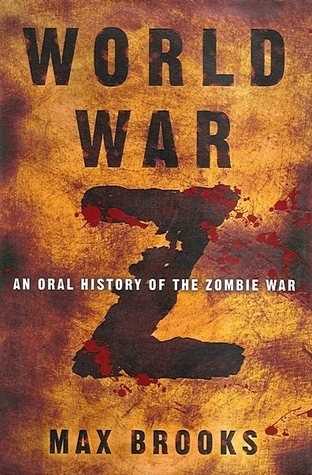
World War Z: 

An Oral History of the Zombie War

by
4.02 of 5 stars 4.02  ·  
The Zombie War came unthinkably close to eradicating humanity. Max Brooks, driven by the urgency of preserving the acid-etched first-hand experiences of the survivors from those apocalyptic years, traveled across the United States of America and throughout the world, from decimated cities that once teemed with upwards of thirty million souls to the most remote and inhospitable areas of the planet. He recorded the testimony of men, women, and sometimes children who came face-to-face with the living, or at least the undead, hell of that dreadful time. "World War Z" is the result. Never before have we had access to a document that so powerfully conveys the depth of fear and horror, and also the ineradicable spirit of resistance, that gripped human society through the plague years.

Ranging from the now infamous village of New Dachang in the United Federation of China, where the epidemiological trail began with the twelve-year-old Patient Zero, to the unnamed northern forests where untold numbers sought a terrible and temporary refuge in the cold, to the United States of Southern Africa, where the Redeker Plan provided hope for humanity at an unspeakable price, to the west-of-the-Rockies redoubt where the North American tide finally started to turn, this invaluable chronicle reflects the full scope and duration of the Zombie War.

Most of all, the book captures with haunting immediacy the human dimension of this epochal event. Facing the often raw and vivid nature of these personal accounts requires a degree of courage on the part of the reader, but the effort is invaluable because, as Mr. Brooks says in his introduction, "By excluding the human factor, aren't we risking the kind of personal detachment from history that may, heaven forbid, lead us one day to repeat it? And in the end, isn't the human factor the only true difference between us and the enemy we now refer to as 'the living dead'?"

Note: Some of the numerical and factual material contained in this edition was previously published under the auspices of the United Nations Postwar Commission. Eyewitness reports from the first truly global war>(less)


The Tragedy of Arthur

The Tragedy of ArthurThe Tragedy of Arthur is an emotional and elaborately constructed tour de force from bestselling and critically acclaimed novelist Arthur Phillips, “one of the best writers in America” (The Washington Post).

Its doomed hero is Arthur Phillips, a young man struggling with a larger-than-life father, a con artist who works wonders of deception but is a most unreliable parent. Arthur is raised in an enchanted world of smoke and mirrors where the only unshifting truth is his father’s and his beloved twin sister’s deep and abiding love for the works of William Shakespeare—a love so pervasive that Arthur becomes a writer in a misguided bid for their approval and affection.

Years later, Arthur’s father, imprisoned for decades and nearing the end of his life, shares with Arthur a treasure he’s kept secret for half a century: a previously unknown play by Shakespeare, titled The Tragedy of Arthur. But Arthur and his sister also inherit their father’s mission: to see the play published and acknowledged as the Bard’s last great gift to humanity. . . .

Unless it’s their father’s last great con.

By turns hilarious and haunting, this virtuosic novel—which includes Shakespeare’s (?) lost King Arthur play in its five-act entirety—captures the very essence of romantic and familial love and betrayal. The Tragedy of Arthur explores the tension between storytelling and truth-telling, the thirst for originality in all our lives, and the act of literary mythmaking, both now and four centuries ago, as the two Arthurs—Arthur the novelist and Arthur the ancient king—play out their individual but strangely intertwined fates.

New York Times Notable Book • A New Yorker Reviewers’ Favorite of the Year • A Wall Street Journal Best Novel of the Year • A San Francisco Chronicle Best Book of the Year • A Chicago Tribune Favorite Book of the Year • A Library Journal Top Ten Book of the Year • A Kirkus Reviews Best Book of the Year • One of Salon’s five best novels of the year(less)

 Ayelet Waldman


Ayelet Waldman

Goodreads Author


url

born
in Jerusalem, Israel
December 11, 1964

gender
female

website

genre

member since
May 2011

About this author
edit data
Ayelet Waldman is the author of Love and Treasure, Red Hook Road and The New York Times bestseller Bad Mother: A Chronicle of Maternal Crimes, Minor Calamities and Occasional Moments of Grace. Her novel Love and Other Impossible Pursuits was made into a film starring Natalie Portman. Her personal essays and profiles of such public figures as Hillary Clinton have been published in a wide variety of newspapers and magazines, including The New York Times, Vogue, The Washington Post, and The Wall Street Journal. Her radio commentaries have appeared on "All Things Considered" and "The California Report."


Love & Treasure 

Love & Treasure

by
A spellbinding new novel of contraband masterpieces, tragic love, and the unexpected legacies of forgotten crimes, Ayelet Waldman’s Love and Treasure weaves a tale around the fascinating, true history of the Hungarian Gold Train in the Second World War.

In 1945 on the outskirts of Salzburg, victorious American soldiers capture a train filled with unspeakable riches: piles of fine gold watches; mountains of fur coats; crates filled with wedding rings, silver picture frames, family heirlooms, and Shabbat candlesticks passed down through generations. Jack Wiseman, a tough, smart New York Jew, is the lieutenant charged with guarding this treasure—a responsibility that grows more complicated when he meets Ilona, a fierce, beautiful Hungarian who has lost everything in the ravages of the Holocaust. Seventy years later, amid the shadowy world of art dealers who profit off the sins of previous generations, Jack gives a necklace to his granddaughter, Natalie Stein, and charges her with searching for an unknown woman—a woman whose portrait and fate come to haunt Natalie, a woman whose secret may help Natalie to understand the guilt her grandfather will take to his grave and to find a way out of the mess she has made of her own life.

A story of brilliantly drawn characters—a suave and shady art historian, a delusive and infatuated Freudian, a family of singing circus dwarfs fallen into the clutches of Josef Mengele, and desperate lovers facing choices that will tear them apart—Love and Treasure is Ayelet Waldman’s finest novel to date: a sad, funny, richly detailed work that poses hard questions about the value of precious things in a time when life itself has no value, and about the slenderest of chains that can bind us to the griefs and passions of the past.(less)

Interview with Emma Donoghue

April, 2014

Emma Donoghue
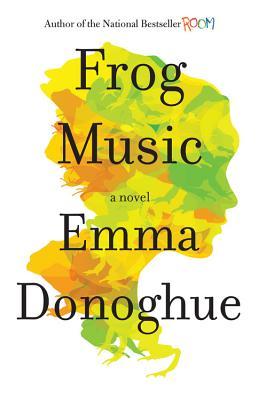
Breathless, Irish-born author Emma Donoghue apologizes for sounding winded as she switches off her beloved treadmill desk. Best known for her gripping international bestseller Room (2010), narrated by a five-year-old boy held captive in a shed with his mother, Donoghue recently put the finishing touches on her screenplay adaptation of the thriller but won't discuss casting choices for the upcoming feature film version. She is, however, eager to discuss her new book, Frog Music, a literary mystery based on the unsolved 1876 murder of Jenny Bonnet in San Francisco 30 years after the Gold Rush. Donoghue's historical novel embraces some peculiar period details such as baby farms, a smallpox epidemic, and the illegal cross-dressing habits of her doomed heroine, who dares to wear trousers while catching frogs to sell.
Join Emma Donoghue on April 22, 2014, for a special discussion of Frog Music. Post your questions now!
With a Ph.D. in 18th-century literature, Donoghue is a prolific and wildly versatile writer of short stories (Astray), fairy tales (Kissing the Witch), and literary criticism (Unspeakable). Now living in London, Ontario, with her partner and their two children, Donoghue chats with fellow author and interviewer Joy Horowitz about why she views writing as a calling, being a good girl and a bad mother, and how filing papers is good for both the creative process and her children's safety.

Goodreads: So a cross-dressing frog catcher—really?
Emma Donoghue: What can I say? Oddity rings my bell.
GR: Did you write this book on your treadmill desk?
ED: I started using the treadmill when I was redrafting, so I can't claim it's all a treadmill desk book. But the treadmill certainly helped to keep my energy up in the final stages of it, yes. I don't find the treadmill changes anything. It'll just keep me alive longer to write more books. That's how it's contributing to literature.
GR: At what speed?
ED: I go along at 2.8 miles an hour.
GR: In Frog Music a San Francisco burlesque dancer and prostitute named Blanche Beunon wants justice for the death of her friend, Jenny Bonnet. Why was writing a murder mystery important to you?
ED: I think the reason this particular murder drew me was, first of all, I could solve it myself. But also I wanted it to be morally ambiguous. I wanted Blanche to find out who pulled the trigger but not be able to make the judgment call any more than she would like to be judged for how she treated her child. So I really wanted to make the morality of the book complicated—a kind of pretentious word, but a mise en abyme of guilt. You know, whenever you try to pin it down, you find there's some further guilt on somebody else's part.
GR: You've turned from writing about the best mother with Ma in Room to the worst one in Frog Music. Was it a relief to write Blanche?
ED: Oh, yes! I've never been able to escape from my Room. Not only has it been continuous publicity since Room came out, but I've been working on the screenplay as well. So working on Blanche and her many moments of low, nasty hostility to her baby was, indeed, a great contrast.
GR: Getting back to the question of motherhood, what do you think it is in you that made you want to look at the difficulties Blanche had with her own baby?
ED: There's a bad mother in me. I carefully planned to become a mother, became a mother—and yet there are so many moments I find myself sullen and churlish, thinking, "Oh, but I want to go to that film. I have to get out of here." These are emotions you don't get to have because it seems so unacceptable to complain about these fabulous children you've got. So I find it a huge relief to write about those feelings.
GR: You have 15 pages of song notes, which is amazing.
ED: I was surprised by my need to include the songs at all. Because the characters have theater and circus backgrounds, it seemed to make sense to have a few songs in there. Also, I was really trying to portray 19th-century San Francisco with such diversity in a lax sort of way. I hate reading historical fiction that grinds to a halt. I wanted a very breezy approach to showing a multicultural city, and music seemed the easiest way to make that happen. Songs themselves are so impure. They'll start out in one tradition, and they'll cross over or be parodied or mixed together. And I always like to leave avenues for my readers to move onto other books.
GR: I had no idea that Stephen Foster, the songwriter of "Oh! Susanna," "Camptown Races," and many more classics, died at 37 with 38 cents in his pocket.
ED: I know! Can you believe it? There's no justice.
GR: The language in this novel is fascinating, both the use of French idioms and the care with which you attend to words of that period. For example, I had never heard the word "doctress."
ED: It's a creepy word, because it's associated with a notorious abortionist. So the fact that she calls herself doctress gives it a lovely, kind of surreal, respectful feel. But it also highlights the fact that you couldn't say "woman doctor." That would be an impossibility. That's a great example of a word that the reader can probably figure out what it means, and it also has that smell of the past.
GR: You mention in the author notes how you worked closely with a whole slew of librarians and academics. Could you explain how you approached your research?
ED: I usually get the idea for my books many years before I get the chance to write them. Really, I got the idea of writing a novel about Jenny Bonnet 15 years ago. And then I might be in San Francisco for a day and write to the California Historical Society and say, "I'm coming through on a book tour; if I came at noon, could you have the pages ready for me to see?" So often I have to ask the librarians to have the pages ready for me, which is so helpful. Also, if you write to someone about something they've published, they usually go out of their way to give you extra detail.
GR: How long did it actually take you to write Frog Music?
ED: If you put together all the work on this book, it's probably about three years. The great thing about working on a future book is, it doesn't feel like work. It feels illicit. You're meant to be working on Book A, so to dash off to the archives researching Book C...you trick your brain into working very hard.
GR: What was the biggest challenge with this book—writing about San Francisco rather than England?
ED: That was a sheer treat. I love San Francisco. It was such a contrast to my own upbringing in Dublin in the 1970s. It was so homogenous. We all looked the same. We all went to Catholic mass. San Francisco in the 1870s was terribly modern by comparison. The challenge for me was making it a murder mystery.
GR: Goodreads member Marcia Mandel asks, "Why do you write—to learn about yourself or to entertain? Did you learn anything about yourself writing this book?"
ED: I feel called to tell these stories. It feels like an urgent and serious task to be commissioned with. Like, your mission, should you choose to accept it, is to write about this frog catcher from a century and a half ago because no one else will. But it's also a lot of fun. I was a bit surprised at how much I liked getting into the mind-set of not just a prostitute but a very masochistic drunken prostitute who makes a lot of bad decisions, because I am such a good girl you wouldn't believe. I've never had an alcoholic drink or cigarette in my life. I had a will when I was 20. I lead a terribly bourgeois life. Gustave Flaubert said something like, you should live like a bourgeois so you can write wildly. That's so me. I have a regular life on my treadmill; I never make bad decisions. So to get into the head of Blanche and make one bad decision after another is with enormous vicarious excitement.
GR: Goodreads Author Karin Slaughter, a bestseller herself, writes, "Your stories are oftentimes propelled by the idea of escape—will Mary Saunders transcend her lowly circumstances? Will Jack ever get out of the room? Answering these questions lends your novels a driving narrative suspense, but you've never really written a true murder mystery. What made you tackle the subject head on in Frog Music?"
ED: Good question, Karin! I'm honored. With Frog Music, I got so interested in Jenny Bonnet as a murder victim. I thought she was just the perfect murder victim. In real life, teenagers get shot in random drive-by shootings. Jenny is the right kind of person to get shot through a window. It seems typical of her. This case, I wanted it to be a head-on tackling of this killing. I was a little bit nervous because I wasn't sure I had the skills. It also wouldn't be a waste to do a literary meditation on the story.
GR: Goodreads member Rebecca Ginsburg writes, "I'm wondering about Ms. Donoghue's reaction to last year's news story about the women held captive for years in Ohio. That came out soon after I finished Room, and the coincidence was too creepy. Art imitating life and all."
ED: It's funny. Somebody even blogged about it, saying Emma Donoghue must feel really bad that she inspired this. It's one thing to see it as an unnerving coincidence. It's another to actually blame the writer. I'm very aware there have been quite a few of these cases. The one in Cleveland was just one more. I was interested in the case, but I see a work of fiction and these cases as very separate.
GR: Goodreads member Ilze said, "I absolutely loved Room. I have read it at least five times. It made me remember why I loved reading so much, so thank you! My question is: Would you ever go back to Jack's world and write a sequel about how he is doing now, living in the real world?"
ED: I'm constantly asked would I write a sequel. If Mom did her job well, Jack would recover and be normal. So there won't be anything to say. That's how I picture him, anonymous and normal. Writing the screenplay is a way of retelling the story.  You get to really see Ma in a way you don't in the book. But no, I can't imagine I would ever write a sequel.
GR: Goodreads member Lori Szymanski said, "Was it emotionally difficult to write Room? Did you ever have to stop and say to yourself, 'This is too difficult'?"
ED: It was hideous. My partner would come home and find me in tears, because I'm very thorough. I wanted to know all cases of children who are locked away—attics, rooms, prisons. I read everything I could find about damaged children. With Frog Music, there were moments when I thought, I'm never going to get out of this smallpox epidemic. There are so many icky things, between baby farms [the terrifying baby mills, where for a price infants are tied to beds and left to perish] and smallpox. It's a little bit like I needed a cold shower. I really, really enjoy writing. Clearly you don't have to enjoy writing books to write a good one. But, in fact, I do.
GR: What are you reading now?
A: I've been literally crying over the Dickens's novel Dombey and Son. I'm rereading all of Dickens. He's just a master. I'm also excited about a novel coming out, The Bees, set in a beehive. It's by Laline Paull and is coming out this year.
GR: Can you tell us about your writing process?
ED: Sure. I do a lot of planning. Some people think this is cold-blooded, but to me it sets your imagination free because we all know the blank page can be intimidating. So the more planning I do—brainstorming and running up ideas in advance—that means by the time I get to the beginning of the book, the screen is not blank. You have springboards and starting points. It also helps me to plan a plot, because that is not my strength. I'm a big talker and make my characters talk. That's easy. But pacing a plot, I really have to teach myself that.
GR: Does that mean you have an office with cards on the wall?
ED: I use a great program called Scrivner, which allows me to have files for the ideas for each chapter and each scene. I can have files for the actual draft of the scene, and I can move them all around. 
GR: Do you procrastinate or do you jump in and go, Yippee?
ED: I'm pretty yippee. It's exciting to start a book, and I often write the ending early on. But I'll procrastinate in the middle. Halfway through I'll start to buy books online or whatever. Occasionally, if I get really stuck, I'll do my filing. Because my writing has been going well, at the moment I have this groaning pile of papers, which might actually fall down on my children.
GR: What books and authors have most influenced you?
ED: I adore Barbara Kingsolver. I have all her books. I'm not sure she's influenced me. I couldn't point you to a particular book, but it's all part of the mix. Occasionally I'll think of a book and how it tackled a particular problem. At the moment I'm working on a book, and Jane Austen's Pride and Prejudice is quite a useful precedent for me. The way she sets up Elizabeth and Darcy as each having a certain level of stiffness in them and having to overcome it and meet halfway. I'm finding that very helpful structurally even though it probably won't show. So mostly you're not aware of what's influenced your literary decisions. All I know is that I couldn't write books without reading them.

Interview by Joy Horowitz for Goodreads. Horowitz, a contributing editor at the Los Angeles Review of Books, is a writer living in Cambridge, Massachusetts, and a senior lecturer at Yale. She is also the author of Tessie and Pearlie: A Granddaughter's Story and Parts per Million: The Poisoning of Beverly Hills High School.
Learn more about Joy and follow what she's reading.
Would you like to contribute author interviews to Goodreads? Contact us.

Kamis, 03 April 2014

Song : Main Agar Kahoon
Music : Vishal-Shekhar
Lyrics : Vishal Dadlani-Javed Akhtar & Kumaar
Singers : Sonu Nigam, Shreya Goshal
Views : 35472


Tumko Paya Hai To Jaise Khoya Hoon
Kehna Chahoon Bhi To Tumse Kya Kahon
Tumko Paya Hai To Jaise Khoya Hoon
Kehna Chahoon Bhi To Tumse Kya Kahon

Kisi Zabaon Mein Bhi Woh Labaz Hi Nahi
Ki Jeene Mein Tum Ho Kya Tumhein Mein Bata Sakun

Main Aagar Kahoon Tumsa Haseen
Kaynaat Mein Nai Hai Kahin
Tareef Yeh Bhi To Sach Hai Kuch Bhi Nahi
Tumko Paya Hai To Jaise Khoya Hoon..

Shokhiyon Mein Dooobi Yeh Aadayein
Chehre Se Jhalki Hui Hain
Zulf Ki Ghani Ghani Ghatayein
Shaan Se Dhalki Hui Hain
Lehrata Aachal Hai Jaise Badal
Bhaahon Mein Bhari Hai Jaise Chandani
Roop Ki Chandani

Main Agar Kahoon Yeh Dilkashi
Hai Nahi Kahin Na Hogi Kabhi
Tareef Yeh Bhi To Sach Hai Kuch Bhi Nahi
Tumko Paya Hai To Jaise Khoya Hoon..

Tum Hue Meherbaan
To Hai Yeh Dastan
Hoo Tum Hue Meherbaan
To Hai Yeh Dastan
Abb Tumhara Mera Ek Hai Karwaan
Tum Jahan Mein Wahan

Main Agar Kahoon
Humsafar Meri
Apsara Ho Tum Ya Koi Pari

Tareef Yeh Bhi To Sach Hai Kuch Bhi Nahi
Tumko Paya Hai To Jaise Khoya Hoon..
Kehna Chahoon Bhi To Tumse Kya Kahon

Kisi Zabaon Mein Bhi Woh Labaz Hi Nahi
Ki Jeene Mein Tum Ho Kya Tumhein Mein Bata Sakun

Main Aagar Kahoon Tumsa Haseen
Lyricsmasticom
Kaynaat Mein Nai Hai Kahin
Tareef Yeh Bhi To Sach Hai Kuch Bhi Nahi
Tumko Paya Hai To Jaise Khoya Hoon…

Rabu, 11 September 2013

Dekatkan SurgaMu


Aku menangis dalam sembahyang
air mataku jatuh berlinang
teringat dosa yang ku lakukan
padamu Tuhan mohon ampunan


roda dunia kadang ku lupa
seakan hidup terus selamanya
dunia bagai fatamorgana
terlena diri dustakan mata


astaghfirullah rabbal baraya
astaghfirullah minal khothoya
hamba bertaubat mohon ampunan
hapuskan segala noda dan dosa


Kau Maha Pengampun, Maha Penyayang
jauhkan dari azab siksaan
dekatkan hamba dengan surga-Mu
sungguh tak sanggup di neraka-Mu


aku menangis dalam sembahyang
air mataku jatuh berlinang
teringat dosa yang ku lakukan
padamu Tuhan mohon ampunan

astaghfirullah rabbal baraya
astaghfirullah minal khothoya
hamba bertaubat mohon ampunan
hapuskan segala noda dan dosa


Kau Maha Pengampun, Maha Penyayang
jauhkan dari azab siksaan
dekatkan hamba dengan surga-Mu
sungguh tak sanggup di neraka-Mu


astaghfirullah rabbal baraya
astaghfirullah minal khothoya
hamba bertaubat mohon ampunan
hapuskan segala noda dan dosa


Kau Maha Pengampun, Maha Penyayang
jauhkan dari azab siksaan
dekatkan hamba dengan surga-Mu
sungguh tak sanggup di neraka-Mu


dekatkan hamba dengan surga-Mu
sungguh tak sanggup di neraka-Mu